
Services
Conventional Pallet Racking is an advanced storage solution that combines efficiency and speed in handling goods. This model stands out for its use of roller conveyors, allowing pallets to slide automatically, optimizing loading and unloading time. It is an ideal choice for companies that operate with FIFO (First In, First Out) systems and frequently handle perishable or high-turnover products.
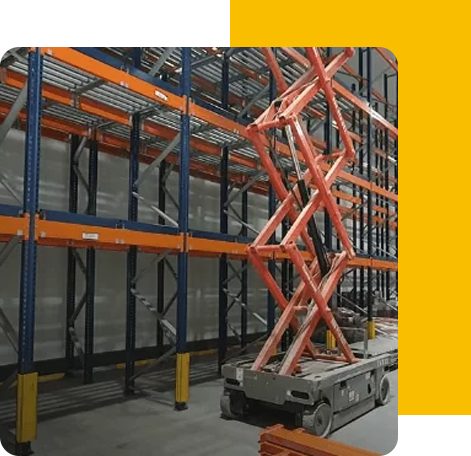
Conventional palletization is supplied in modules, allowing it to be adjusted to different warehouse sizes and operational needs. This feature makes it a viable option for companies that need to expand or modify the configuration of their storage space over time.
Each pallet is stored in specific locations, allowing direct access to any merchandise without the need to move other loads. This facilitates product picking and speeds up logistics processes.
The aisles of conventional pallet racking are designed to allow forklift circulation. The spacing between the structures can be adjusted according to the type of equipment used, ensuring efficiency and safety in the handling of loads.
This system is suitable for storing products with a wide variety of references, dimensions, and packaging formats. From small boxes to bulky pallets, the conventional shelving structure accommodates different types of merchandise, making it a versatile solution for various sectors.
The modular structure allows the shelving to be reused or modified without major difficulties. Therefore, any restructuring in the warehouse can be done quickly, optimizing the layout as the company’s needs evolve.
The modular configuration allows for efficient use of warehouse height, maximizing storage capacity without compromising accessibility.
The ability to adjust load levels and beam spacing allows for the storage of goods of different sizes without wasting space.
Unlike compact systems such as drive-in or dynamic pallet racking, in conventional racking each pallet can be accessed individually, facilitating stock management.
With aisles designed for forklifts, the entry and exit of products is quick and efficient, reducing waiting time in distribution logistics.
The reusability of the structure and the easy adaptation to new configurations make this system an economical and sustainable option in the long term.
Distribution centers handle a wide variety of products and experience high inventory turnover. Conventional shelving allows for efficient organization, facilitating order picking and shipping.
In this sector, where different types of packaging need to be stored, the flexibility of conventional palletization ensures efficient and safe storage.
Storing medications requires accessibility and rigorous organization. With conventional shelving, products are easily identified and handled, ensuring batch traceability.
Parts of different sizes and shapes can be stored in an organized manner, facilitating production and distribution logistics.
Smaller businesses also benefit from this system, as it allows for adjustments as the business grows.
The spacing between the shelves should be planned according to the type of forklift used to ensure efficiency and safety during handling.
Each level of the racking should be designed to support the weight of the stored pallets, preventing overloading that could compromise the structure.
Regular inspection of the structure ensures the safety of the storage and prevents wear and tear that could affect the stability of the shelving.
Implementing an efficient labeling and classification system improves warehouse management and reduces product location time.
Ensuring that employees understand safety regulations and proper cargo handling procedures reduces the risk of accidents and damage to goods.
Conventional pallet racking is one of the most efficient and versatile systems for storing palletized loads. With a modular and easily adaptable design, this solution allows for structured warehouse organization, ensuring accessibility, safety, and speed in the movement of goods.
Whether in large logistics centers or small warehouses, conventional palletization remains the ideal choice for companies seeking a simple, scalable, and economical system for inventory management.

Olá, Vamos Falar ?